

 6:04
Timestamps
Share
Full transcript
Support in the first days after a spinal cord injury
What led me to create Blink of an Eye was experiencing firsthand a gap in medical care and in support services for families facing a spinal cord injury. Our son Archer, one of our five children, was catastrophically injured in a diving accident while we were on vacation and paralyzed from the neck down. For the first eight months, he was hospitalized in a number of hospitals around the country while we fought to keep him alive, and I saw what was not available. Had I not had an amazing support group, I couldn’t imagine another family doing it on their own, because we were barely doing it ourselves.
Spinal cord injuries are not that common, although common enough: there are almost 18,000 new spinal cord injuries a year in the United States. That’s a small number compared with something like heart attacks, and very few hospitals have the expertise.
We have a rapid-response bedside support team that we call our Heal Team. Everyone at Blink of an Eye is either a family member of someone with a spinal cord injury or living with one themselves, and they’re all highly trained as mediators and in trauma-informed responses. A subset of that group can fly or travel to be bedside within hours or days of the call. Families are often simply told by the surgeon that their son will never walk again, and they’re turned upside down. We come in to literally hold their hand.
We come in to literally hold their hand.
Louise Phipps Senft, Blink of an Eye
People find us through many channels. One of the main ones is our spinal cord injury navigators — our SCI Navigator Program is the first in the country. Once you’re in what our community calls the club you never wanted to be a member of, people come to you, so families reach out to our navigators and ambassadors directly. We also have a toll-free number, 1-844-41-BLINK. It has all grown organically. After years as a mediator for thousands of people across the country, I can call on people I know to host the Heal Team overnight, which saves on hotel costs.
When we connect a family member with one of our SCI navigators, it’s all done over FaceTime, and through technology our navigators are available 24/7 for the first 90 days and then throughout what we call the Miracle Year. One of Blink of an Eye’s real sweet spots is our relationships with the 18 model SCI facilities, which helps people who qualify through their insurance get into those precious beds for the best rehab in the country quickly.
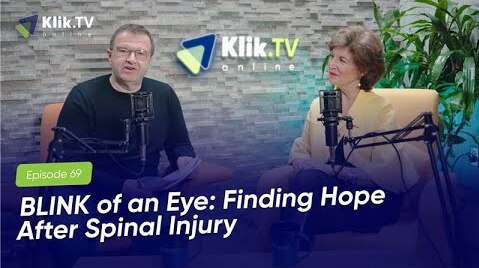
The Blink of an Eye podcast comes out once a week wherever you download your podcasts. I’m the creator and co-producer, and I wanted it to feel like an old-fashioned radio story, with real insight into people’s personal experiences. We would be ever so grateful for donations to Blink of an Eye, our nonprofit, and for connections to people who have had a spinal cord injury.