We See THIS Before a Security Issue, and Most Teams Miss It!
 Published on February 24, 2026
Updated on February 24, 2026
 4 mins to read
Security incidents rarely begin with hackers. They begin with patterns. A delayed software update that keeps getting postponed. A help desk ticket that looks routine but repeats every week. A login alert was dismissed because nothing “actually happened.” A team is convinced everything is functioning normally because operations haven’t stopped yet.
From the outside, the organization appears stable. Systems are running. Employees are productive. Leadership assumes cybersecurity risks are under control. And yet, in many real-world environments, this is exactly the phase we recognize right before a security issue surfaces. At Klik Solutions, working across healthcare, legal, nonprofit, manufacturing, and enterprise environments, we repeatedly encounter the same overlooked signal: loss of visibility.
The Moment Security Quietly Starts Slipping
Most teams expect cybersecurity threats to arrive loudly — alarms triggering, systems locking, suspicious activity clearly visible. Reality looks quite different.
Security problems usually develop when organizations move from proactive oversight to reactive troubleshooting. Small operational inefficiencies accumulate until teams no longer see emerging risks early enough to stop them. Ironically, nothing appears broken.
This false stability is often what makes the warning signs easy to ignore.
Cybersecurity challenges today rarely stem from a single vulnerability. Instead, they grow from gaps between systems, processes, and people — especially when monitoring and analytics fail to reveal patterns across the environment.
A Real Example: The Nonprofit Phishing Incident
One of the clearest illustrations comes from a nonprofit organization supported by Klik Solutions.
The organization had maintained reliable IT operations for years. Infrastructure management and day-to-day support were functioning smoothly. From a leadership perspective, technology risks seemed minimal.
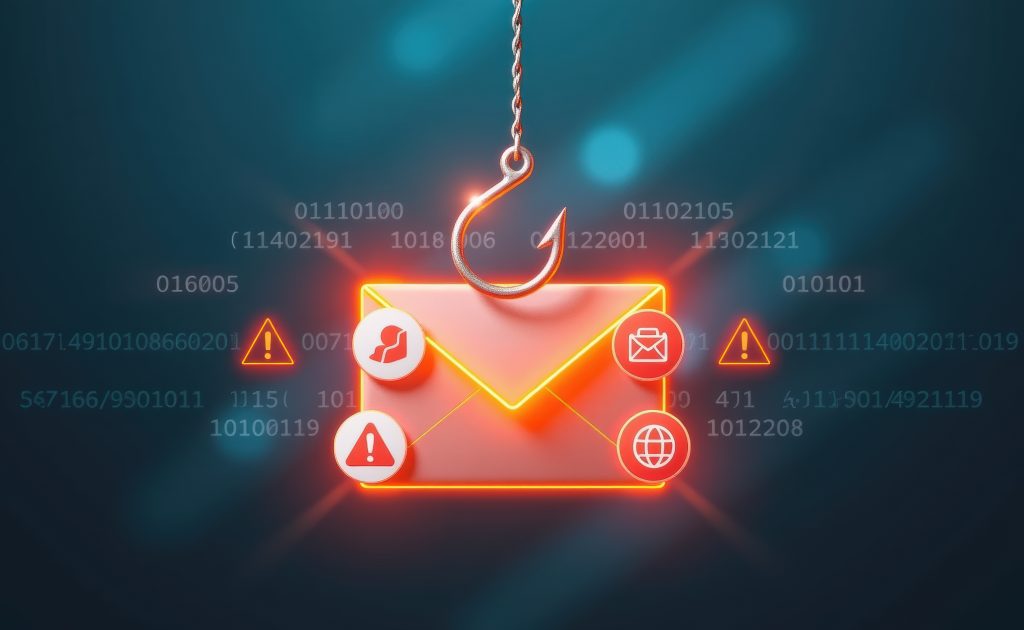
Then a phishing attack occurred.
Employees unknowingly interacted with malicious emails, creating exposure that could have escalated into significant operational disruption. The incident itself appeared suddenly, yet the investigation revealed something important:
The warning signs had existed long before the attack.
User behavior risks, email vulnerabilities, and awareness gaps had quietly developed over time. Once identified, the team at Klik Solutions strengthened monitoring, improved safeguards, and reinforced security practices to prevent recurrence. The breach attempt was not the beginning of the problem. It was the moment visibility finally returned.
The Pattern We Notice Again and Again
Across case studies, industries, and company sizes, the same sequence tends to appear before security events. Operations become busier than oversight.
IT teams focus heavily on resolving tickets, onboarding users, or maintaining infrastructure. Strategic monitoring slowly receives less attention because urgent tasks dominate daily workflows. Security stops evolving alongside the business.
Repetitive Issues Start Appearing
In another case involving internal service analytics, leadership discovered recurring help desk problems hidden within routine requests. Individually, these tickets looked harmless. Collectively, they revealed systemic weaknesses.
By implementing analytics dashboards and tracking operational metrics such as response times and recurring issue categories, teams gained visibility into trends and were able to address risks proactively — often before they escalated into larger disruptions. The lesson was clear: recurring operational friction often signals deeper technical exposure.
Teams Assume Monitoring Equals Protection
Many organizations believe that security tools alone guarantee safety. Firewalls exist. Antivirus software runs. Alerts are enabled. But tools without interpretation create noise instead of protection.
Klik Solutions built managed detection and response capabilities specifically to move beyond alert monitoring toward continuous threat hunting, incident analysis, and rapid response supported by 24/7 visibility across environments.
Security maturity begins when teams stop asking “Do we have tools?” and start asking “Do we understand what they’re telling us?”

Why Most Teams Miss the Warning Signs
The reason is surprisingly human. Security risks rarely interrupt productivity immediately. Employees continue working. Revenue continues flowing. Leadership priorities shift toward growth initiatives rather than preventative investment. Without visible consequences, early indicators feel theoretical.
Meanwhile:
- outdated infrastructure remains active,
- permissions expand unchecked,
- shadow IT grows,
- patch cycles slow,
- user behavior risks increase.
Eventually, attackers encounter an environment already prepared for exploitation.
The Legal Firm Infrastructure Refresh Story
A legal firm approached the Klik team while facing aging infrastructure nearing end-of-life status. Performance degradation and increasing support costs were already visible. More importantly, evolving client security requirements introduced compliance pressure that legacy systems could no longer safely support.
Rather than waiting for failure, Klik Solutions collaborated with leadership to modernize infrastructure proactively, replacing outdated storage and server environments before vulnerabilities translated into operational risk. Nothing catastrophic had happened yet. That timing made all the difference. By recognizing technological fatigue early, you can often prevent security incidents instead of waiting for an emergency response.
What Proactive Security Actually Looks Like
Contrary to popular belief, proactive security rarely feels dramatic.
It looks like this:
- Risk assessments are performed regularly.
- Endpoint monitoring is running continuously.
- Employee phishing awareness training.
- Vulnerability remediation before audits demand it.
- Incident response plans are tested long before incidents occur.
Klik Solutions’ layered cybersecurity approach focuses on prevention, detection, and response, working simultaneously and ensuring we identify and contain threats before they affect business operations.
When implemented correctly, the best security outcomes are invisible because incidents never materialize.
A Quick Self-Check for Leadership Teams
Before the next audit, incident, or compliance review, organizations should ask:
- Do we have full visibility into user and system activity?
- Are recurring IT issues analyzed for patterns?
- Is monitoring interpreted by security experts?
- Can we detect abnormal behavior before damage occurs?
- Are aging systems creating unseen exposure?
If these answers feel uncertain, the early warning stage may already be underway.
Summing up
Security incidents rarely begin with sophisticated attacks. They begin when organizations stop seeing clearly. The systems still run. Teams remain productive.
Nothing appears urgent. Yet beneath the surface, visibility fades, patterns go unnoticed, and small risks accumulate quietly. Because in cybersecurity, the most important moment is usually the one before anything goes wrong.
FAQ
What is the earliest sign of a potential cybersecurity issue?
Loss of visibility is often the first indicator. When organizations cannot clearly track system activity, user behavior, or recurring operational trends, risks begin accumulating unnoticed.
Why don’t traditional security tools prevent all incidents?
Security tools generate alerts, but alerts require analysis and response. Without continuous monitoring and expert interpretation, threats can remain hidden within normal operational noise.
How can businesses move from reactive to proactive security?
By implementing continuous monitoring, analytics-driven insights, employee awareness training, and structured incident response planning. Proactive environments identifyrisks before attackers exploit them.
Is cybersecurity only a concern after company growth?
No. Growth actually increases attack surfaces through new users, applications, vendors, and cloud environments. Security planning should evolve alongside business expansion rather than follow it.