What MODPA Means for Your Baltimore Business
 Published on March 13, 2026
Updated on March 13, 2026
 6 mins to read
On a typical morning at a small manufacturing firm just outside Baltimore, the operations manager reviews the company’s latest customer inquiries. The business has grown steadily over the past decade, supplying precision components to regional distributors and equipment manufacturers. Like many modern companies, much of their communication now happens online—through email forms, CRM software, and digital customer portals.
Each interaction leaves behind small pieces of information: names, email addresses, IP addresses, purchasing preferences, and communication records. Individually, these details may seem insignificant. Together, however, they form a growing collection of customer data.
Until recently, most small and mid-sized businesses didn’t spend much time thinking about how this information was handled beyond basic cybersecurity protections. But a new law in Maryland is beginning to change that conversation.
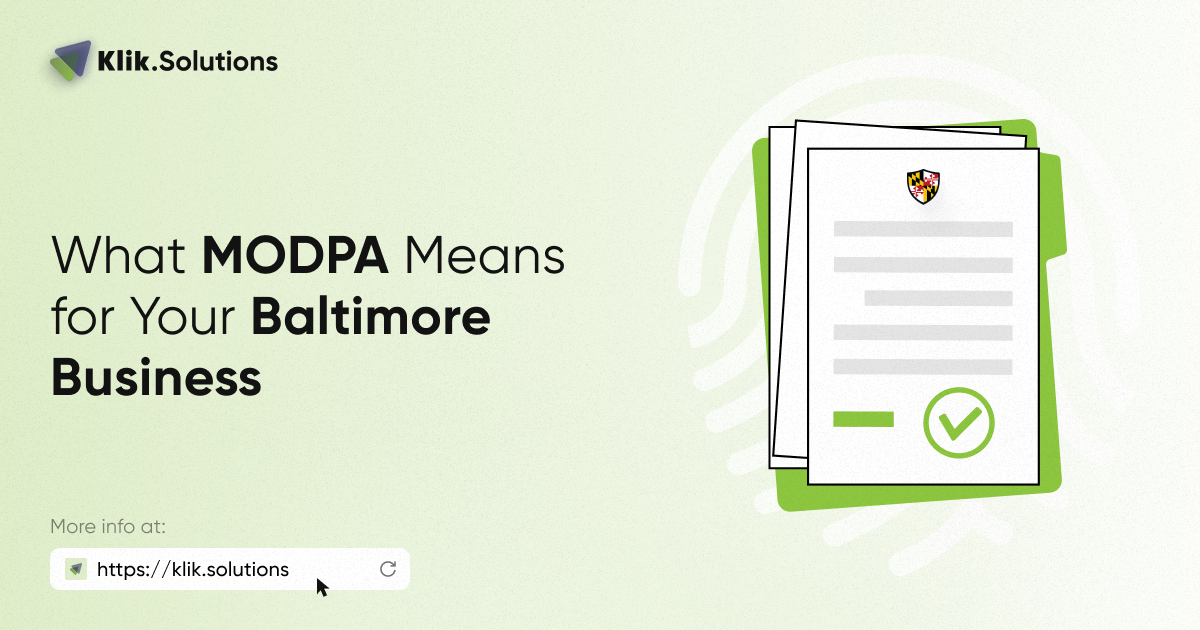
The Maryland Online Data Privacy Act (MODPA) is introducing new expectations for how businesses collect, store, and use personal information. The law took effect in October 2025, and active enforcement by the Maryland Attorney General begins in April 2026—just weeks away.
For companies across Baltimore—from manufacturers and logistics firms to service providers and technology startups—understanding what this law means is becoming increasingly important.
Key Point:
MODPA is considered one of the most consumer-protective state privacy laws in the United States, particularly because of its strong data minimization rules and its prohibition on selling sensitive personal data.
Preparing now can help local organizations avoid disruptions while strengthening customer trust.
What Is the Maryland Online Data Privacy Act (MODPA)?
The Maryland Online Data Privacy Act (MODPA) was designed to give Maryland residents greater control over how their personal data is used. It establishes rules for businesses that collect or process consumer information and creates new rights for individuals to manage their data.
The timeline for the law is important:
- MODPA was signed into law in 2024.
- The law took effect on October 1, 2025.
- Active enforcement begins April 2026.
Because the law is already technically in effect, Maryland businesses are currently in what many privacy professionals consider the final preparation window before regulators begin active enforcement.
This period allows organizations to review their data practices, update privacy policies, and ensure they can properly respond to consumer privacy requests.
Businesses should also be aware of a temporary “Right to Cure” provision, which allows organizations to correct certain violations after receiving notice rather than immediately facing penalties. However, this grace period sunsets in April 2027, meaning the opportunity to fix issues without penalties will not last indefinitely.
Key Point:
March 2026 represents a critical preparation period for Maryland businesses before active MODPA enforcement begins.

Why MODPA Matters for Baltimore Businesses and Local Industries
Baltimore’s economy is powered by a wide range of industries—manufacturing, logistics, healthcare, cybersecurity, professional services, and emerging technology companies. Across these sectors, businesses are increasingly relying on digital tools to manage operations and customer relationships.
Even traditional industries are becoming more data driven.
Our example manufacturing company illustrates this shift. Ten years ago, most customer communication happened through phone calls and invoices. Today, orders may begin through a website inquiry, customer interactions are tracked through CRM systems, and marketing efforts rely on email campaigns and analytics dashboards.
MODPA generally applies to businesses that process personal data from:
- 35,000 or more Maryland residents annually, or
- 10,000 residents if the company generates revenue from selling personal data.
This threshold is lower than many other state privacy laws, which often begin at 100,000 consumers. As a result, mid-sized companies in Baltimore may fall within MODPA’s scope sooner than they might under laws in other states.
Even businesses below these thresholds may still feel the impact. Many software vendors, cloud providers, and enterprise customers are already aligning their practices with modern privacy standards.
Key Point:
Because Maryland’s threshold is relatively low, many mid-sized regional businesses may need to prepare for MODPA sooner than expected.
New Consumer Data Rights Under Maryland’s MODPA
One of the most noticeable changes introduced by MODPA is the expansion of consumer rights.
Imagine a customer who previously purchased equipment components from our fictional Baltimore manufacturer sends a message asking, “Can you tell me what information you have about me in your system?”
Under MODPA, businesses must be prepared to respond to that request.
Consumers now have several important rights.
- Access to Personal Data: Customers can request confirmation that a business is processing their personal data and ask for details about that information.
- Correction of Information: Consumers have the right to request corrections if their personal data is inaccurate.
- Data Deletion: Individuals may ask businesses to delete personal information that is no longer necessary for its original purpose.
- Opt-Out of Targeted Advertising: Customers can opt out of having their data used for targeted advertising or profiling.
- Transparency About Data Use: Businesses must clearly disclose how personal data is collected, used, and shared.
Key Point:
Organizations must be able to respond to consumer privacy requests efficiently and within defined time frames.
For many businesses, this means creating internal processes to handle requests clearly and consistently.

Sensitive Data Protections Under MODPA
Another important element of the law involves sensitive personal data, which receives stronger protections.
Sensitive data under MODPA includes:
- Health information.
- Biometric identifiers, such as fingerprint or facial recognition data.
- Precise geolocation.
- Race, religion, or sexual orientation.
- Data related to minors.
This can affect everyday business practices. Some companies use fingerprint scanners for employee time tracking, while others collect precise location data through mobile applications or delivery systems.
Unlike many other state privacy laws, MODPA prohibits the sale of sensitive personal data, even if a consumer gives consent.
Key Point:
In Maryland, businesses cannot “consent their way” into selling sensitive data such as biometric identifiers or precise geolocation. The sale of this information is simply not allowed.
Data Minimization: The Biggest Operational Change for Many Businesses
One of the most significant principles within MODPA is data minimization.
Under the law, businesses are expected to collect only the personal information that is “strictly necessary” for a specific service or transaction.
Imagine the Baltimore manufacturing company adds a newsletter signup form to its website. In most cases, the company would only need:
- Name
- Email address
If the form also requests demographic data, precise location information, or unrelated personal details, that additional information may not meet the “strictly necessary” standard.
Many companies unintentionally collect excess data through:
- overly complex forms.
- integrated marketing tools.
- tracking technologies.
- automated CRM integrations.
Key Point:
MODPA encourages businesses to move away from “collect everything” strategies and instead gather only the data required to deliver a service.
Reducing unnecessary data collection can also simplify data management and reduce security risks.

How Baltimore Businesses Can Prepare for MODPA Compliance
Preparing for modern privacy expectations does not necessarily require a complete overhaul of your business systems. Often, a thoughtful review of existing processes can significantly improve compliance.
With enforcement beginning soon in April 2026, now is an ideal time for organizations to confirm that their systems and policies align with the new law.
1. Review What Data You Collect
Start by identifying what customer information your business collects and where it is stored.
This may include:
- website forms
- marketing platforms
- CRM systems
- analytics tools
- customer databases
Key Point:
You cannot manage privacy risks effectively without understanding your data ecosystem.
2. Update Your Privacy Policy
Your privacy policy should clearly explain:
- what data you collect.
- why you collect it.
- how it is used.
- whether it is shared with third parties.
Clear communication helps build trust with customers.
3. Create a Process for Consumer Requests
Businesses should establish procedures for handling requests related to:
- access
- corrections
- deletion
- advertising opt-outs
Even if requests are rare, having a defined process ensures consistency.
4. Evaluate Marketing and Tracking Tools
Many marketing and analytics platforms collect data automatically.
Businesses should understand how the following tools collect and process customer information:
- analytics software.
- advertising platforms.
- email marketing tools.
- customer engagement systems.
In some cases, these tools may gather more information than businesses realize through tracking pixels, cookies, or integrated data-sharing features.
Key Point:
Businesses remain responsible for how third-party tools collect and process customer data on their behalf.
5. Train Employees
Employees interact with customer data every day, sometimes without realizing its sensitivity.
Training should help staff understand:
- how personal information is handled
- what qualifies as sensitive data
- how to respond to privacy-related requests
Key Point:
Privacy compliance is not only a legal responsibility. It’s an operational responsibility that involves the entire organization.
Turning Data Privacy into a Competitive Advantage
While privacy regulations can initially feel like a compliance burden, they can also create new opportunities.
Customers are paying close attention to how their personal information is used. Businesses that demonstrate transparency and responsible data practices often build stronger trust and credibility.
Returning to our Baltimore manufacturing company, implementing clear data governance practices could actually strengthen relationships with customers and partners.
Organizations that prioritize responsible data practices often experience benefits such as:
- stronger customer trust
- improved brand reputation
- better organized internal data systems
- reduced cybersecurity risk
Key Point:
Responsible data practices are quickly becoming a competitive differentiator in today’s digital economy.
The Future of Data Privacy for Maryland Businesses
Baltimore has long been known for its strong business community—from family-owned manufacturers to growing technology firms and logistics companies connected to the Port of Baltimore.
As digital tools continue to shape how businesses operate, responsible data practices are becoming just as important as product quality, operational reliability, and customer service.
The Maryland Online Data Privacy Act reflects a broader shift toward greater transparency and accountability in how organizations handle personal information.
With enforcement beginning in April 2026, Baltimore businesses have a valuable opportunity to take proactive steps now—before regulators begin actively reviewing compliance.
Final Key Point:
Businesses that prioritize transparency, responsible data use, and customer trust will be best prepared for the future of digital business in Maryland.